

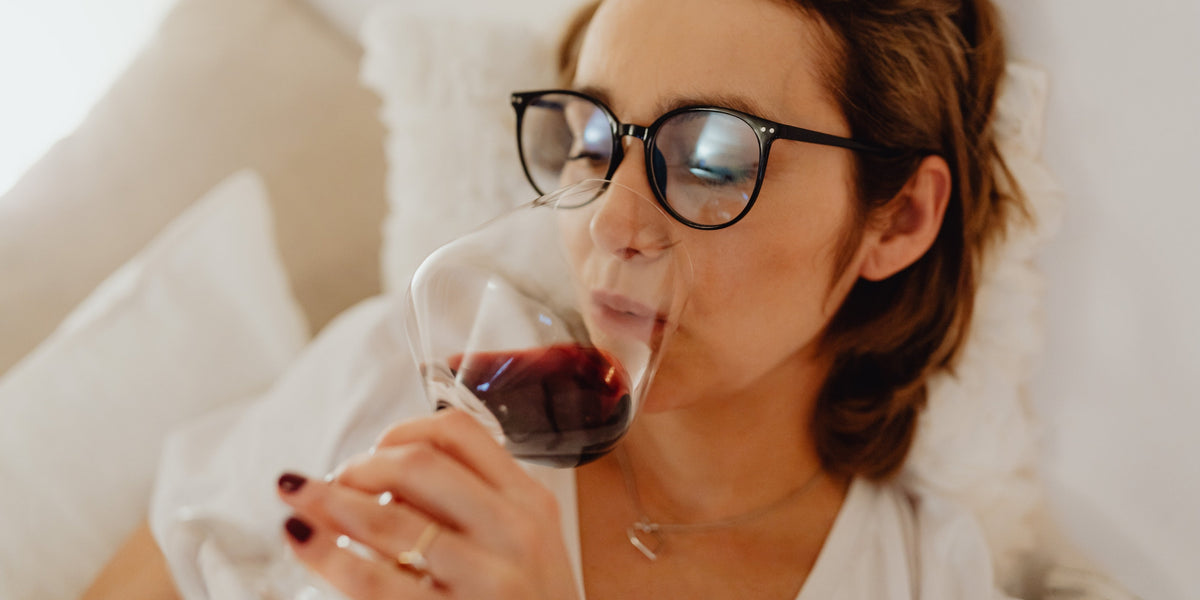
Alcohol and sleep — nightcap or sleep trap? A glass of wine with dinner or a cocktail before bed might feel like a soothing way to unwind, but alcohol’s relationship with sleep is more complicated than it seems.
Alcohol can make you feel drowsy at first, but that initial sedation doesn’t necessarily translate to better sleep. Research shows that alcohol can disrupt normal sleep architecture, particularly REM sleep, and contribute to more fragmented sleep as the night goes on. The effects can carry into the next day, leaving you tired, unfocused, and less rested than you’d expect.
Here’s what you need to know about how alcohol affects sleep, why you may have trouble sleeping after drinking, and how to rest better if you choose to imbibe from time to time.
Alcohol and Sleep: Key Points
- Alcohol may make you feel sleepy at first, but sedation is not the same as restorative sleep.
- Alcohol can disrupt normal sleep architecture, particularly REM sleep, and the effects generally become more pronounced as alcohol intake increases.
- The “nightcap” idea can be misleading. Falling asleep faster after drinking does not necessarily mean you are sleeping better.
- Alcohol may contribute to nighttime sleep problems, including frequent waking, snoring, sleep-disordered breathing, and insomnia.
- If you choose to drink, timing and amount matter. Drinking less and allowing more time between your last drink and bedtime may help limit some sleep disruption.
Note: This blog may contain links to Naturepedic products and promotional content where relevant to the topic discussed.
Does Alcohol Help You Sleep?
Alcohol may make you feel sleepy, but it does not generally help you get better-quality sleep. At higher doses, alcohol may shorten the amount of time it takes to fall asleep, but research also shows that it disrupts REM sleep — an important part of normal sleep architecture.
A 2025 systematic review and meta-analysis of 27 studies found that alcohol delayed the onset of REM sleep and reduced REM duration. REM disruption appeared even at relatively low doses and became more pronounced as alcohol intake increased. By contrast, reductions in the time it took to fall asleep were observed primarily after higher doses of alcohol.
In other words, falling asleep faster and sleeping well are two different things. Alcohol changes your normal sleep patterns rather than simply helping you settle into a more restful night.
How Does Alcohol Affect Your Sleep Cycles?
Alcohol can change the way your body moves through the different stages of sleep, especially REM sleep. Its effects can also shift throughout the night, which helps explain why you may fall asleep quickly after drinking only to find yourself awake hours later.

REM, or rapid eye movement sleep, is one part of the normal sleep cycle and is associated with processes including dreaming, memory, and emotional processing. Research has consistently found that alcohol can delay REM sleep and reduce the amount of time spent in it.
Alcohol’s sedating effects tend to be strongest earlier in the night. As your body metabolizes the alcohol, however, that effect fades. Research reviews have found that sleep can become more fragmented later in the night, contributing to more awakenings and less consistent rest.
The result can be a night that seemed long enough on the clock but still didn’t leave you feeling restored. That’s one reason you may wake up feeling tired even after spending your usual number of hours in bed.
Why Can’t I Sleep After Drinking Alcohol?
If you fall asleep easily after drinking but wake up later and struggle to get back to sleep, alcohol itself may be part of the reason. As its sedative effects wear off, the second half of the night can become lighter and more fragmented.
This is sometimes described as a rebound effect. You may wake more often, wake earlier than planned, or find yourself feeling alert at an inconvenient hour despite having been sleepy at bedtime. Alcohol can also interfere with the normal regulation of your sleep-wake cycle, especially when drinking becomes frequent or happens close to bedtime.
That makes alcohol a poor long-term strategy for trouble falling or staying asleep. Using a drink to make yourself sleepy can create an unhelpful cycle: alcohol makes you drowsy initially, your sleep becomes disrupted later, and the resulting fatigue may make another nightcap seem appealing the following evening.
Why Am I So Tired After Drinking?
Feeling exhausted after drinking isn’t only about staying up late. Alcohol can leave you tired the next day because your sleep may be more fragmented and contain less REM sleep, even if you were technically in bed for a full night.

The physical effects associated with a hangover can add to that fatigue. According to the National Institute on Alcohol Abuse and Alcoholism, disrupted sleep and mild dehydration are among several factors that can contribute to hangover symptoms. Headaches, gastrointestinal irritation, inflammation, and the effects of alcohol metabolism may also play a role.
So, if you wake up feeling foggy after drinking, simply looking at how many hours you slept doesn’t tell the whole story. Sleep quality and continuity matter, too.
Does Alcohol Dehydrate You While You Sleep?
Alcohol can increase urination and contribute to mild dehydration, but dehydration isn’t the only reason drinking can leave you feeling lousy or sleeping poorly. Alcohol suppresses vasopressin, a hormone that helps your kidneys retain fluid, which can cause you to lose more fluid through urination.
That may mean more bathroom trips during the night or waking up feeling thirsty — both of which can interrupt sleep. But drinking water doesn’t erase alcohol’s effects on sleep architecture. Research suggests that dehydration and hangover symptoms can occur together, but dehydration alone does not explain the full experience of a hangover or disrupted sleep.
If you choose to drink, alternating alcoholic beverages with water can help you maintain your normal fluid intake. Just remember that hydration is not a workaround for alcohol’s effects on REM sleep or nighttime awakenings.
Can Alcohol Cause Insomnia or Make Other Sleep Problems Worse?
Alcohol can contribute to insomnia symptoms and may aggravate other sleep-related problems, especially when drinking is frequent or happens close to bedtime. The connection can extend beyond simply waking up once or twice during the night.
- Frequent waking: As alcohol’s sedative effects fade, sleep may become more fragmented, making it harder to stay asleep.
- Snoring and sleep-disordered breathing: Alcohol can relax tissues in the upper airway and aggravate sleep-disordered breathing. If snoring is already an issue, learn more about common causes of snoring and ways to address them.
- Insomnia: Regular alcohol use is associated with poorer sleep quality and insomnia symptoms. Using alcohol as a sleep aid can also reinforce a cycle in which poor sleep and drinking feed into one another.
- Night sweats: Alcohol can affect thermoregulation, which may contribute to feeling hot or sweaty overnight. If overheating is a recurring problem even when you haven’t been drinking, explore other reasons you may sleep hot.
- Parasomnias: Disrupted sleep-stage transitions may contribute to unusual sleep experiences or behaviors in some people, particularly when sleep is already fragmented.
The NIAAA notes that alcohol can alter sleep physiology and aggravate sleep-disordered breathing. If insomnia, snoring, breathing changes, or daytime sleepiness are persistent, it’s worth discussing them with a health care professional rather than assuming alcohol is the only cause.
Can Alcohol Cause Vivid Dreams?
Alcohol can change when and how much REM sleep you get, which may influence dreaming and sometimes contribute to vivid dreams later in the night. The effect is tied to alcohol’s disruption of normal REM patterns rather than alcohol simply “causing” more dreams.
Because alcohol initially suppresses or delays REM sleep, REM can shift later in the sleep period as alcohol is metabolized. This phenomenon is sometimes referred to as REM rebound. When more REM occurs later, some people may notice unusually vivid dreams, nightmares, or more memorable dreams.
Dream experiences vary considerably from person to person, so not everyone who drinks will notice a change. But if you consistently experience vivid dreams or disrupted sleep after drinking, alcohol may be one factor worth considering.
Can You Take Melatonin or Sleep Aids After Drinking Alcohol?
Alcohol should not be used to amplify the effects of melatonin, prescription sleeping pills, or other sedating medications. Combining alcohol with sleep aids can increase drowsiness and, depending on the medication, may cause dangerous side effects.
Mayo Clinic advises against drinking alcohol while taking melatonin. Alcohol can also interact much more seriously with prescription sleep medications. The NIAAA warns that combining alcohol with medications that have sedative effects can increase risks including impaired coordination, overdose, and suppressed breathing.
That includes some prescription insomnia medications, benzodiazepines, opioids, and even certain over-the-counter medications that cause drowsiness. Alcohol and medications can also interact even when they aren’t taken at exactly the same time.
If you take a medication or supplement for sleep and aren’t sure whether alcohol is safe with it, check the label and talk with your doctor or pharmacist rather than trying to offset a night of drinking with a sleep aid.
How Long Before Bed Should You Stop Drinking Alcohol?
If you choose to drink, a practical goal is to finish your last drink at least three hours before bedtime. More time may be helpful depending on how much you drink, your body, medications, health conditions, and other individual factors.

Cleveland Clinic recommends allowing at least three hours between alcohol and bedtime to give your body more time to metabolize it before sleep. That doesn’t mean alcohol will have completely left your system after three hours or that your sleep will be unaffected — it’s a practical buffer rather than a guarantee.
Amount matters, too. The recent meta-analysis on alcohol and sleep found a dose-response relationship, with REM disruption becoming greater as alcohol intake increased. So, having your final drink earlier may help, but reducing how much you drink can matter just as much.
What Are the Long-Term Effects of Alcohol on Sleep?
When alcohol use becomes regular or heavy, sleep problems can become more persistent rather than disappearing after a single rough night. Habitual alcohol use has been associated with poorer sleep quality, insomnia symptoms, daytime sleepiness, and sleep-disordered breathing.
Your body can also develop tolerance to alcohol with repeated use, meaning a person may need more alcohol to experience the same sedating effects. That can encourage increasing consumption while doing little to solve the underlying sleep problem.
Sleep problems and problematic alcohol use can also reinforce one another. The NIAAA notes that sleep disorders are common among people with alcohol use disorder and that alcohol can aggravate sleep-disordered breathing and alter normal sleep physiology. Sleep disturbances may persist for a period of time even after alcohol use stops.
If you’re regularly using alcohol to fall asleep, finding that you need increasingly more alcohol to get the same effect, or are concerned about your drinking, consider talking with a health care provider or exploring NIAAA treatment resources. If you drink heavily on a regular basis, do not abruptly stop drinking without medical guidance, as alcohol withdrawal can be dangerous.
How Can You Sleep Better After Drinking?
There’s no trick that can instantly reverse alcohol’s effects on sleep once you’ve been drinking. Your body still needs time to metabolize the alcohol, but a few practical choices can help you avoid adding more disruptions to the night.
- Stop drinking well before you go to bed. The more time your body has to metabolize alcohol before sleep, the better.
- Switch to water. Staying normally hydrated can help address thirst and fluid loss, although water won’t reverse alcohol’s effects on REM sleep.
- Skip the “one more drink” nightcap. Continuing to drink closer to bedtime extends the period during which alcohol can affect your sleep.
- Don’t stack alcohol with a sleep aid. Avoid trying to counteract disrupted sleep with melatonin, sleeping pills, or sedating medications unless a health care professional has specifically told you the combination is safe.
- Keep your bedroom comfortable. A dark, quiet, comfortably cool room can remove other barriers to rest. If temperature frequently disrupts your sleep, these tips for sleeping hot may help.
- Return to your normal sleep schedule. One rough night doesn’t necessarily require completely changing your routine the next day. A consistent sleep-wake schedule helps reinforce your circadian rhythm.
If you repeatedly find that even small amounts of alcohol significantly disrupt your sleep, the most useful experiment may simply be cutting back or taking a break and seeing how your sleep responds.
What Can You Drink Instead of Alcohol Before Bed?
If the ritual of an evening drink helps you transition out of the day, you don’t necessarily have to give up the ritual — just the alcohol. An alcohol-free drink can still mark the beginning of your wind-down routine without alcohol’s effects on sleep architecture.

Depending on what you enjoy, that could mean caffeine-free herbal tea, sparkling water with fruit or herbs, an alcohol-free mocktail, or another favorite evening beverage. Naturepedic’s guide to seasonal drinks for your evening routine includes ideas such as chamomile tea and a tart cherry mocktail.
The drink itself also doesn’t have to do all the work. Pair it with a consistent wind-down routine, such as:
- Taking a warm bath or shower
- Reading instead of scrolling before bed
- Trying gentle yoga, stretching, or meditation
- Following a consistent evening routine
- Dimming the lights as bedtime approaches
Your sleep environment matters, too. A dark, quiet room and a comfortable mattress that suits your sleep preferences can help make your bedroom a more inviting place to wind down.
Rethinking the Nightcap
Alcohol can make you feel sleepy, but feeling sedated and getting restorative sleep aren’t the same thing. Even when drinking seems to help you fall asleep, it can change REM sleep, contribute to later-night awakenings, and leave you feeling less refreshed the next morning.
If you choose to drink, paying attention to both timing and amount can help you understand how alcohol affects your own sleep. And if the nightcap is really about having a ritual that signals the end of the day, an alcohol-free drink or relaxing bedtime routine may give you the wind-down you’re looking for without the same tradeoff in sleep quality.
Have feedback on our story? Contact us to let us know what you think or visit our About Us page to learn more!